How Crowns, Bridges and Implants Restore Missing or Damaged Teeth
Crowns, bridges, and implants each play a role in restoring teeth. Here's how they work together.
Three Restorative Tools
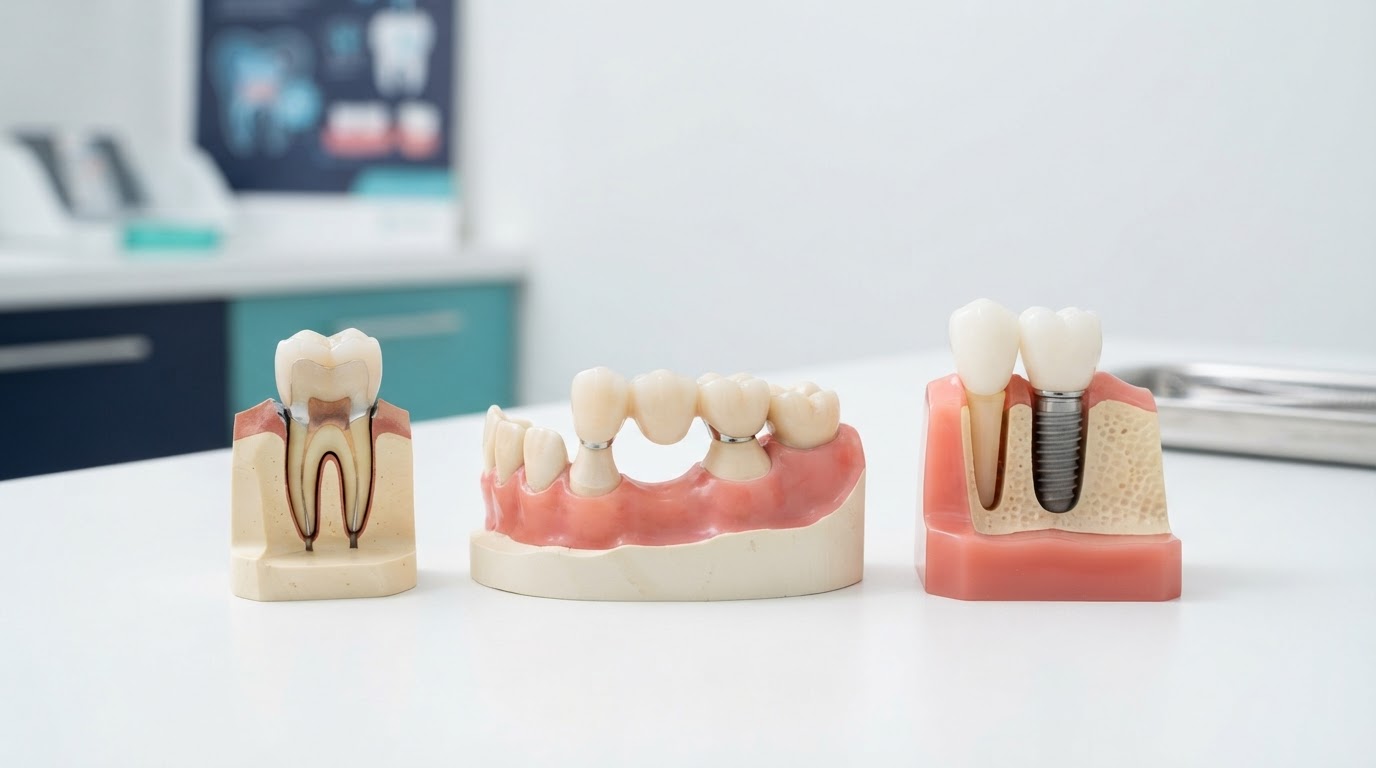
Crowns, bridges, and implants each play a distinct role in restoring missing or damaged teeth. Understanding how they work — and how they can work together — can help you understand the options your dentist may discuss with you.
Each is used in different situations, and they are sometimes combined as part of a comprehensive treatment plan.
Dental Crowns
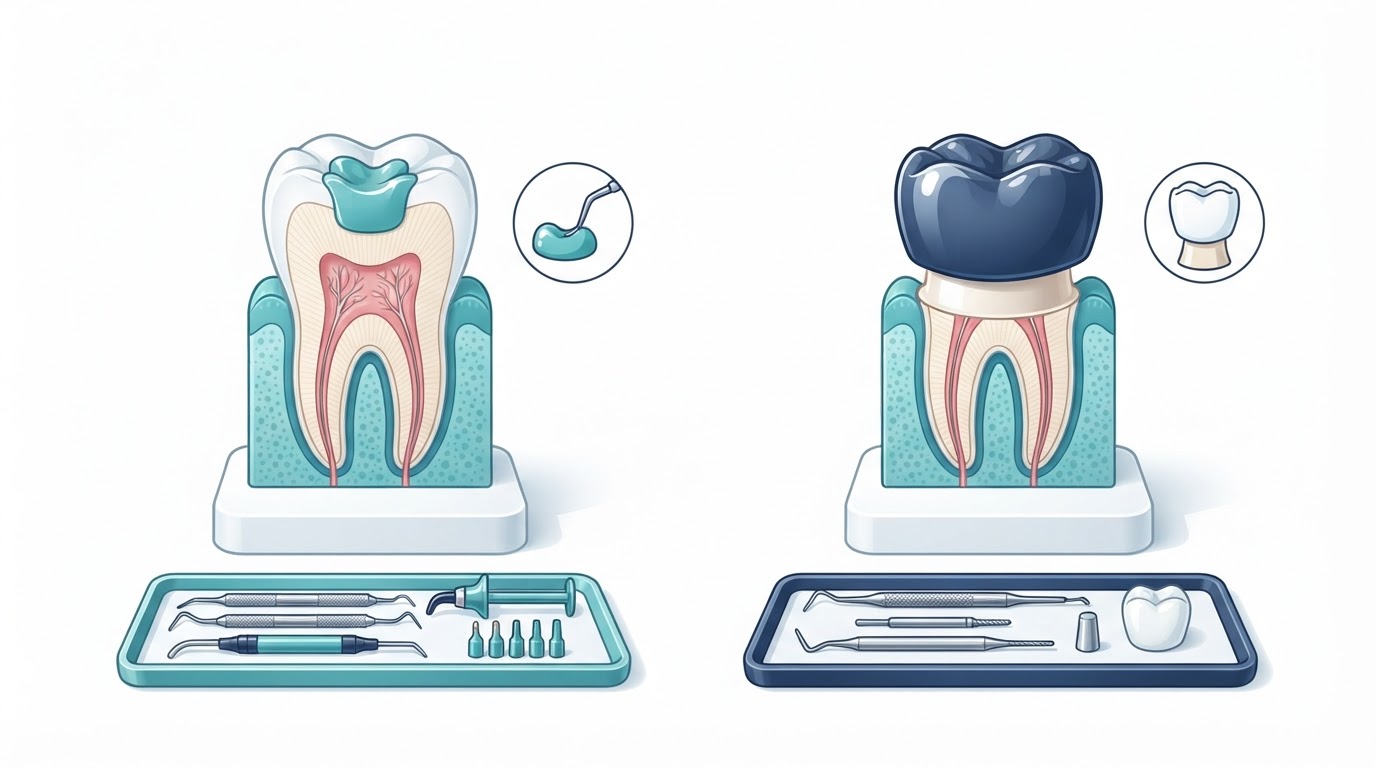
A crown is a custom-made restoration that covers the entire visible portion of a tooth. It is often recommended when a tooth is significantly weakened, broken, or has a large existing restoration that cannot be repaired with a filling alone.
Crowns restore strength, shape, and appearance to a damaged tooth and are also used to protect a tooth after root canal treatment.
Dental Bridges
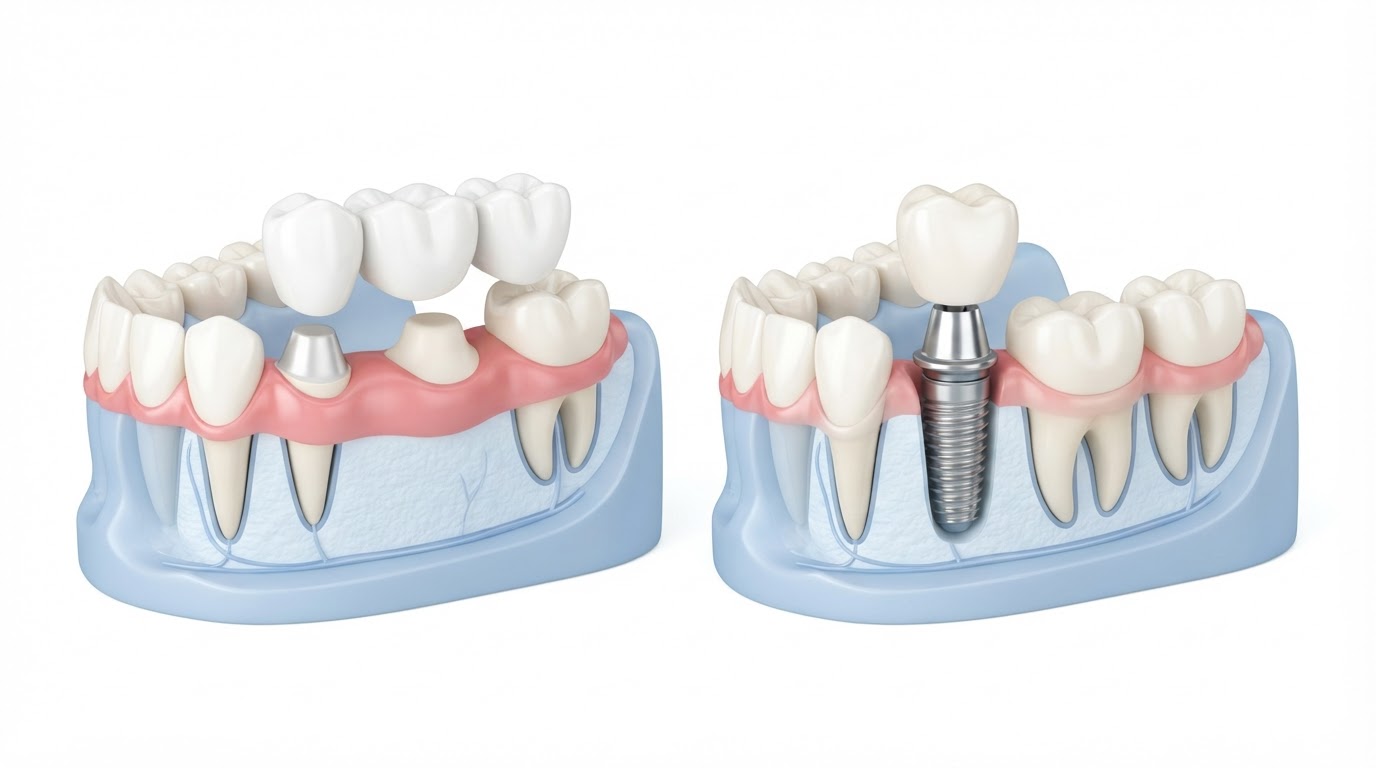
A bridge replaces one or more missing teeth by anchoring replacement teeth to crowns on the adjacent teeth or to implants. It is a fixed restoration that does not need to be removed daily.
Bridges help restore the appearance of a complete smile and support normal chewing and speech after tooth loss.
Dental Implants
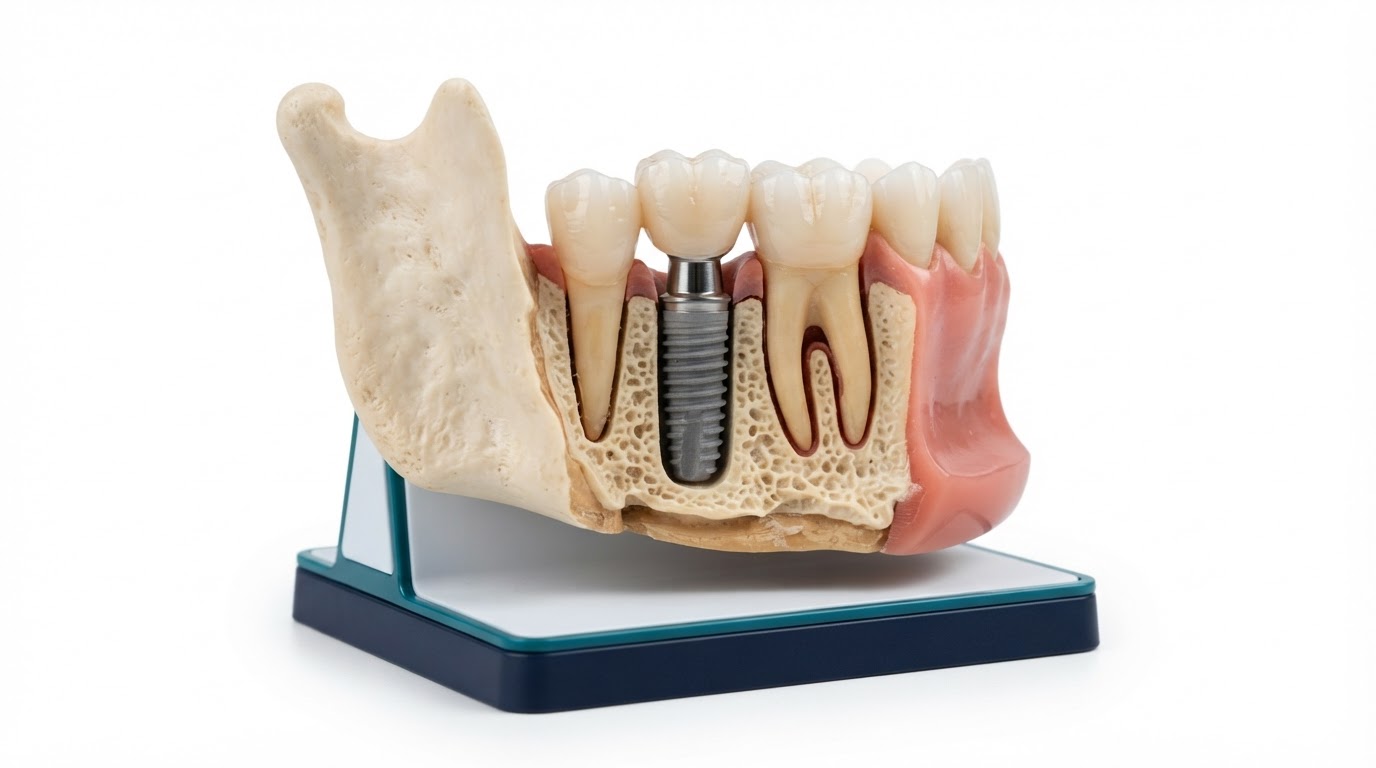
An implant replaces a missing tooth root with a titanium implant placed in the jaw bone. After healing, it supports a crown, bridge, or denture. Because an implant stands on its own, it does not rely on adjacent teeth for support.
Implants require adequate bone for support, and bone grafting may be recommended if bone has been lost.
How They Work Together
These restorations are sometimes combined. For example, an implant can support a crown to replace a single tooth, or multiple implants can support a bridge or denture. A crown may also be placed on a tooth that has undergone root canal treatment.
Your dentist can explain how these options may fit into a personalized treatment plan after evaluating your oral health.
Schedule an Evaluation
If you have a damaged or missing tooth, schedule a visit at Najor Dental Center. After examining your teeth and reviewing any imaging, your dentist can explain which restorative option may be appropriate for your situation.
Learn more about this treatment
Dental CrownsWebsite information is provided for general educational purposes and is not a substitute for examination, diagnosis, or individualized advice from a licensed dental professional.